
Table of Contents
the journey
From Budapest Beat Music to Musical Theatre
Peter Sipos’s musical journey has crossed borders, languages and genres.
It began in post-war Budapest, passed through the extraordinary Hungarian beat scene of the 1960s and 1970s, and eventually led to recording studios and theatrical stages across Europe and North America.
Along the way, Western rock and roll met the classical music of Peter’s childhood. Performance led to composing, arranging and producing; popular songs grew into complete theatrical scores; and creative partnerships repeatedly opened unexpected new possibilities.
This is the story of a musician continually moving forward—listening, learning, collaborating and searching for the next musical destination.
Budapest → Hungária → Juventus → International Work → Canada → Musical Theatre → Leonardo
MUSIC FROM THE BEGINNING
A Childhood Surrounded by Sound
Music was present in Peter’s life from the beginning.
His mother, Edit Fábry, was an opera singer and later became a highly respected singing teacher. Her pupils included performers who would become familiar names in Hungarian classical music. Peter therefore grew up in a world in which singing was taken seriously: voices were trained, performances prepared and music treated as both an art and a profession.
His mother initially imagined a classical future for him, perhaps even as a conductor. Peter, however, was fascinated by the more immediate excitement of popular music. The sounds that captured his imagination did not come principally from the opera house or concert hall, but from records, radio broadcasts and the new rhythms beginning to cross into Hungary from the West.
Yet the classical foundation of his childhood never disappeared. Years later it would become increasingly evident in his arrangements, his instinctive understanding of voices and his ability to write music on a theatrical scale.
Peter’s musical identity would eventually grow from the meeting of these two worlds: the discipline and colour of classical music combined with the energy, melody and direct emotional appeal of popular song.
SOUNDS FROM THE WEST
Discovering Rock and Roll
For a young musician growing up in communist Hungary, Western popular music represented more than entertainment. It offered a tantalising glimpse of another world.
Records were not always easily available, and broadcasts from beyond Hungary’s borders acquired particular importance. Peter listened closely, learning songs and arrangements by ear and absorbing the sounds of rock and roll, beat music and the increasingly adventurous popular music of the 1960s.
The arrival of the Beatles was transformative. Their songs demonstrated that popular music could be immediate and accessible while also possessing inventive harmonies, imaginative arrangements and a distinctive artistic identity.
Other influences followed. The Shadows helped shape Peter’s early interest in guitar music, and he studied the bass playing of their member Jet Harris. The Beach Boys revealed new possibilities in vocal harmony; Crosby, Stills & Nash demonstrated the power of closely blended voices; and American and British rock groups introduced sounds, rhythms and production ideas that Peter and his contemporaries eagerly explored.
These artists were not simply copied. Their recordings became an informal musical education. Peter listened for the relationship between bass and drums, the placing of harmonies, the construction of introductions and instrumental passages, and the way a recording could establish its identity within its opening moments.
Long before modern technology made the world’s music instantly accessible, careful listening became one of Peter’s most valuable creative tools.
SYCONOR: THE FIRST BAND
In January 1966, sixteen-year-old Peter went to hear Syconor rehearse at a Budapest clubhouse. Their bassist had not arrived, so someone suggested that Peter try the absent musician’s Czech-made Jolana bass. He had never played one before. Within minutes, he had found the instrument that would shape his musical life.
Peter learned the band’s repertoire in time for its next Saturday performance by listening repeatedly to recordings and working out the bass lines note by note. Syconor played regular dances at the Bosch clubhouse, performed at an international youth camp that summer and appeared on a television programme for young audiences.
At the camp, Peter also tried writing a song of his own. Its melody resurfaced four years later on Hungária’s first album, with new lyrics and the title Up Front the Engineer Drives the Train.
A newspaper account of a Syconor rehearsal, published in September 1966, singled out Peter’s bass playing. It is a remarkable contemporary glimpse of a musician at the very beginning of his career.
English Translation of Highlighted Area reads:
The rehearsal continues. The excellent playing of the young bass guitarist, Peter Sipos, catches my attention. In fact, he is the most talented member of the band, even though they are all musically well-trained.


ATLANTISZ: TURNING PROFESSIONAL
When Syconor broke up towards the end of 1966, Peter was invited to join Atlantisz. To accept a full-time touring job while still at school, he needed a professional musician’s permit. He promised his mother that he would continue his education as a private student—and later kept that promise.
In 1967, Atlantisz took him on tours across Hungary, with further trips to Slovakia and Yugoslavia. Concerts, television appearances and recording sessions introduced him to the people and working practices of the music business. Although he eventually left because he disagreed with the band’s musical direction, Peter remained grateful to its leader, Béla Neményi, for giving him his first professional opportunity.
After Atlantisz, Peter briefly formed another group with his former Syconor colleague Tamás Barta. Their shared love of British music shaped its repertoire: Peter championed the Beatles, while Barta favoured the Hollies. The partnership anticipated the years they would later spend together in Hungária.
THE SPORT HOTEL: A DIFFERENT KIND OF EDUCATION
In 1968, Peter joined Astor, the resident band at Budapest’s Sport Hotel. Playing six nights a week alongside experienced musicians gave him an intensive education in performance. The hotel’s international visitors also helped him discover new records and musical equipment arriving from the West.
That year, a West German film crew shot a scene in the hotel bar. The band appeared alongside singer Rex Gildo, miming an accompaniment as he performed. Peter, then eighteen and wearing his “Lennon” cap, remembers enjoying a conversation with Gildo during filming.
By the end of the year, Peter was ready to return to beat music. When an opportunity arose to join Hungária, he left the Sport Hotel behind. The next chapter of his career was about to begin.

ON STAGE IN BUDAPEST
Hungária and Juventus
Peter entered professional music during one of the most exciting periods in Hungarian popular culture.
When he joined Hungária in 1969, the band was already one of the emerging names of the Hungarian beat movement. Peter was still a teenager, but he quickly became part of a demanding professional world of concerts, radio sessions, recordings, travel and rapidly growing public attention.
Hungária gave him a national stage. It also taught him about the complicated realities of maintaining a successful group: strong personalities, changing ambitions, creative disagreements and the constant need to develop.
When the original line-up separated in 1971, Peter joined Juventus. There he helped build a band with a harder rock sound, formidable musicianship and particularly accomplished three-part vocal harmonies.
The Juventus years expanded Peter’s role. He was no longer only a bassist and singer. He was writing, arranging and working as a musical director for radio and television projects. His work with leading Hungarian singer Kati Kovács culminated in the 1972 Táncdalfesztivál, where Juventus accompanied her on the Grand Prix-winning Add már, Uram, az esőt.
Juventus also introduced Peter to musicians who would remain important to his career and helped him develop the contacts in East Germany that made the next chapter possible.
When Juventus came to an end in early 1973, Peter recognised an opportunity. He proposed reuniting with Miklós Fenyő and brought Zoltán Kékes and Attila Csurgay with him into a reborn Hungária.
Peter’s two Hungarian bands were therefore not isolated chapters. The musicians, skills and international relationships developed in one continually flowed into the next.
A MUSICAL WORLD EXPANDS
From Gershwin to Berlin
While Peter was establishing himself in popular music, his listening continued to broaden.
A recording of George Gershwin’s Rhapsody in Blue, performed and conducted by Leonard Bernstein, became a particularly important discovery. Peter listened to it repeatedly and began to recognise a musical world beyond the bands that had first inspired him.
Gershwin demonstrated that popular rhythms, memorable melodies and sophisticated orchestral writing did not have to exist separately. That realisation led Peter back towards Liszt, Bach and the classical music he had encountered during childhood.
The effect was gradual but profound. Peter did not abandon rock and popular song; he began adding new colours to his musical vocabulary. The combination of rhythmic energy, melody, harmony and orchestral scale would eventually become central to his theatre writing.
At the same time, his professional world was expanding geographically.
Peter’s fluent German proved invaluable when an East German television production team visited Budapest in 1972. The friendship he established with producer Toni Kohlsdorf led to introductions in Berlin and relationships with broadcasters and the East German recording industry.
Those contacts created opportunities for Juventus, Kati Kovács and, later, Hungária. They allowed Peter to work beyond Hungary, enter new studios and understand how music could reach audiences across linguistic and political borders.
A single international encounter had opened a door that would remain important for much of the following decade.
AN UNEXPECTED WELCOME IN WEST BERLIN
In 1979, Peter made the life-changing decision not to return to communist Hungary. He remained in West Berlin, leaving behind an established career with Hungária and facing an uncertain future in the West.
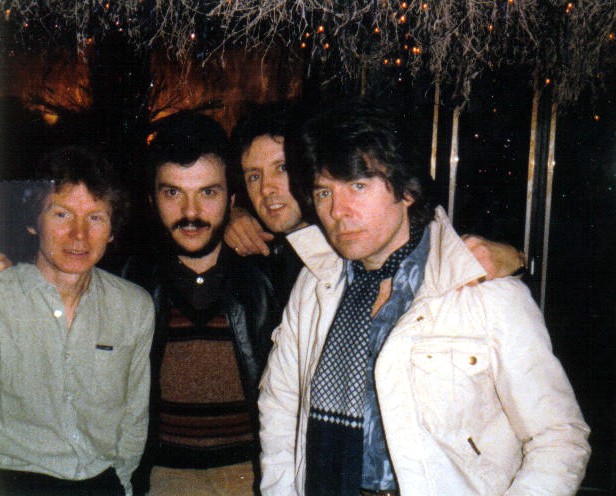
That December, Peter returned to Joe’s Bierhaus—a venue where Hungária had performed many times—to see the celebrated British group The Searchers.
Because Peter knew the proprietor, he was invited backstage and introduced to the musicians as a fellow performer who had recently appeared on the same stage. Despite Peter’s still-limited English, the meeting quickly became warm and informal. A guitar appeared, and for a few memorable minutes they played music together.
The Searchers’ concert that evening was greeted with tremendous enthusiasm. For Peter, watching one of the groups that had helped shape the music of his youth perform freely in the West carried a particular significance. At a moment when his own future remained uncertain, the encounter offered an exhilarating glimpse of the musical world he had chosen to enter.
BEYOND THE BAND
Composer, Arranger and Producer
As Peter’s career developed, his work increasingly extended beyond performing on stage.
Radio and television commissions required him to arrange for different combinations of singers and instruments. He worked with orchestras, shaped recordings for other artists and learned how to translate an initial musical idea into a finished production.
This demanded a different kind of musicianship. When writing for another singer, Peter had to understand the qualities of that particular voice. When arranging for a larger ensemble, he had to consider colour, balance, dramatic development and the relationship between every element of the music.
These experiences gradually established the foundations of his later work as a theatrical composer.
Peter continued collaborating with Hungarian artists after leaving the country. A particularly striking example came in 1985 with Mozart Rock, recorded with internationally acclaimed Hungarian opera singer Júlia Hamari.
The project transformed some of Mozart’s best-known music through rock instrumentation, contemporary rhythms, vocal arrangements and studio production. Rather than treating classical music as an untouchable museum piece, Peter explored what might happen when it was placed within the sound world of modern popular music.
For Peter, the project brought several strands of his musical life together: the operatic tradition inherited from his mother, the rock music that had defined his youth, and his developing skills as an arranger and producer.
It demonstrated that the distance between opera and popular music was not necessarily as great as it appeared.
Peter’s Canadian work during this period also included Pour vous, recorded by a young Céline Dion in 1985. Such projects placed him behind the scenes rather than in the spotlight, but they reflected the increasingly international reach of his work.
A FRIENDSHIP ACROSS BORDERS
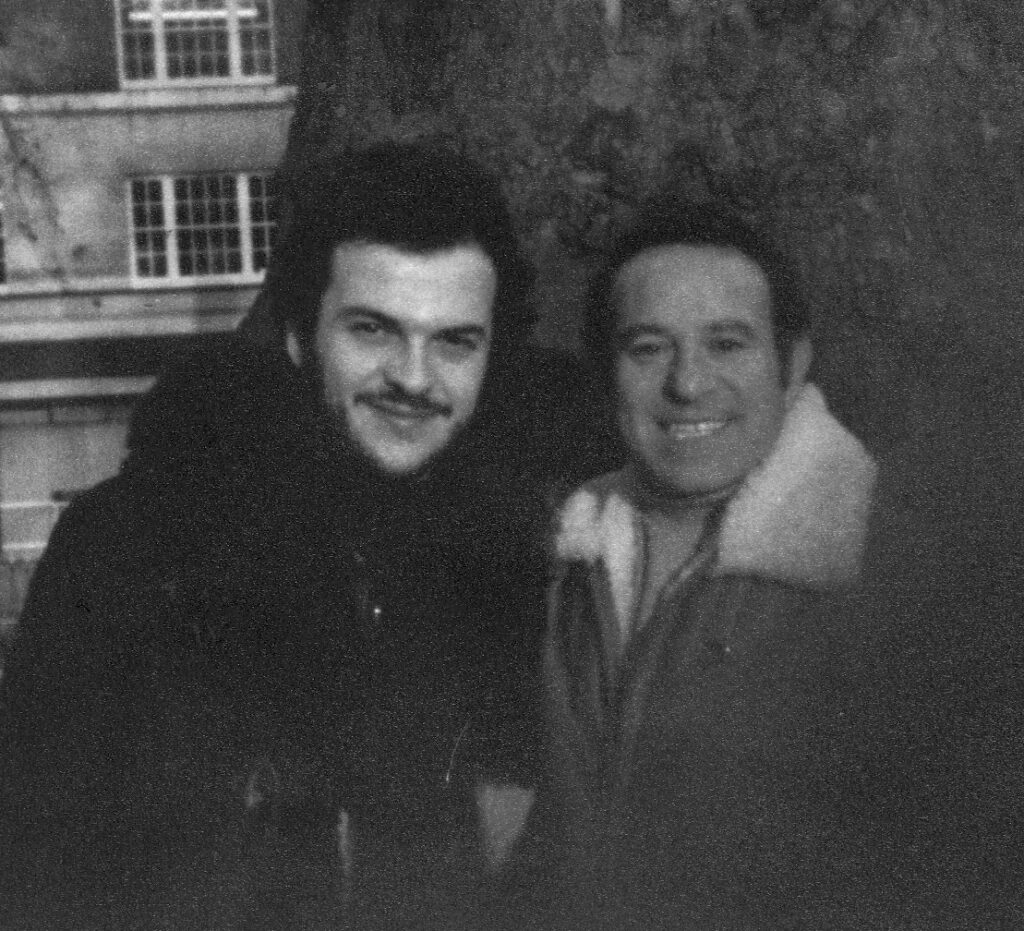
In 1976, Hungária shared an East Berlin television programme with Brotherhood of Man, shortly after the British group’s Eurovision victory with Save Your Kisses for Me. Following the performance, Peter became friends with their manager, songwriter and record producer Tony Hiller.
When Peter visited London the following year, Hungarian television producer Péter Módos asked him to explore whether a major British act might appear at Metronom ’77, Hungary’s popular-music festival. The available budget could not attract the international superstars initially suggested, but Hiller proposed Brotherhood of Man, then enjoying enormous success around the world.
The arrangement was agreed, and the group travelled to Budapest to perform at the festival’s gala evening. Their polished performance delighted the audience and gave the event a distinctly international dimension.
What began as a chance backstage conversation became both a successful professional collaboration and an enduring friendship. Hiller continued to follow Peter’s later work in musical theatre with genuine interest, and the two remained close until Hiller’s death in 2018.
A NEW LIFE IN CANADA
Beginning Again
On 18 October 1979, Peter left Hungary. After an interim period in Germany, he arrived in Canada on 28 May 1980.
The move divided his life into two distinct chapters.
In Hungary, Peter had been a recognised member of successful bands, an experienced recording musician and an established figure within popular music. In Canada, those achievements were largely unknown. Reputation did not automatically cross the Atlantic with him.
He had to begin again.
The early Canadian years demanded adaptability. Peter learned unfamiliar repertoire, performed at private functions and accepted musical work very different from the concerts and recording projects he had known in Europe. It was not always the career he had imagined, but it allowed him to remain a working musician while building new relationships and discovering the Canadian cultural landscape.
Starting again also brought a form of creative freedom. Peter was no longer working within the restrictions of the Hungarian state music industry. He could encounter new styles, new communities and new collaborators while continuing his relationships with musicians in Europe.
Canada did not erase Peter’s Hungarian musical identity. It gave that identity a new environment in which to develop.
The melodic instincts of Budapest, the vocal arrangements of Hungária and Juventus, the orchestral lessons of Gershwin and the practical experience of years spent in studios all travelled with him.
Those accumulated experiences would eventually find an unexpected new home: musical theatre.
BUILDING A MUSICAL LIFE IN MONTREAL
In Montreal, Peter worked across theatre, broadcasting, arranging and recording. He created the musical arrangements for a production of The Jazz Singer at the Saidye Bronfman Centre, while his work with the World Jewish Song Festival brought him further opportunities to arrange and conduct.
A contemporary profile in The Gazette captured another side of that period: Peter was recording rock music again and had established his own label, Runway-99 Records. The article shows how he continued to pursue new projects while building his career in Canada.
In January 1994, Peter served as musical director for The Innkeeper, presented by the Yiddish Theatre and Young Actors for Young Audiences at Montreal’s Saidye Bronfman Centre. The production featured original music by Eli Rubinstein. Peter’s role was part of the theatre experience he was developing in the years leading up to Jeanne.


FINDING THE THEATRE
Music Becomes Story
Musical theatre offered Peter something no previous part of his career had provided.
Within a theatrical score, popular song, rock rhythms, classical colour, vocal harmony and orchestral writing could all serve a larger dramatic story. Music no longer had to exist within the limits of a single recording or concert performance. A theme could return, change and acquire new meaning as characters and events developed.
Peter discovered that his apparently diverse musical experiences had been preparing him for precisely this kind of work.
Jeanne
Peter’s first major theatrical undertaking grew into Jeanne, an ambitious musical inspired by the story of Joan of Arc.
Working with writer and lyricist Vincent de Tourdonnet, Peter created a sweeping score capable of carrying an epic historical story while retaining an intimate emotional centre.
The project also brought Peter into contact with Martin Charnin, the Tony Award-winning creator and original director of Annie. Charnin’s involvement became the beginning of one of the most important creative relationships in Peter’s theatrical career.
Jeanne received successful productions in Montreal and Quebec City during the 1990s, demonstrating that Peter’s music could command a large theatrical stage.
Robin Hood
Peter’s association with Martin Charnin led to another major collaboration.
With a book by Tony Award-winning writer Thomas Meehan, lyrics and direction by Charnin and music by Peter, Robin Hood reimagined the familiar legend many years after the traditional adventure had supposedly ended.
The musical developed through readings, workshops and productions over more than a decade. Its journey took it from early development to Village Theatre in Washington State, an outdoor production at Kitsap Forest Theatre and, eventually, a professional staged reading in New York.
Through Robin Hood, Peter experienced musical theatre as a continuing process—one in which writers learn from actors and audiences, revise their work and repeatedly reconsider how best to tell the story.
Contact
In 2007, director and producer Alan Bryce invited Peter to compose a musical based on Carl Sagan’s Contact, with lyrics by Amy Engelhardt.
The collaboration connected Peter in Montreal, Engelhardt in Los Angeles and Bryce in Washington State. Music, lyrics and ideas travelled between three cities through telephone calls, email and online communication.
The project also brought Peter and Amy into contact with Ann Druyan, Carl Sagan’s widow and creative collaborator, who responded enthusiastically to their musical interpretation.
Contact received its world première at Centerstage Theatre in 2009. Although rights issues prevented its continued development, the project demonstrated Peter’s willingness to explore an unusual and intellectually ambitious subject: humanity’s search for life beyond Earth and the relationship between scientific knowledge, faith and wonder.
Dybbuk
Dybbuk took Peter’s theatrical writing into a darker and more intimate world.
Drawing upon Jewish folklore and themes of love, memory, destiny and spiritual possession, the musical connected dramatic storytelling with a cultural inheritance extending far beyond Peter’s own lifetime.
Although less extensively produced and documented than his other musicals, Dybbuk represents another important facet of Peter’s work: his readiness to enter a distinct musical world and allow the subject itself to determine the character of the score.
MUSIC FOR THE STAGE
Alongside the development of his own musicals, Peter continued to compose original music for other theatrical productions. His work with Canadian playwright Aviva Ravel brought him into two very different dramatic worlds, demonstrating his ability to create music that served the atmosphere, characters and storytelling of the stage.
DANCE LIKE A BUTTERFLY
Around 2001, Peter composed the music for Aviva Ravel’s one-woman drama Dance Like a Butterfly. The Cameo Productions playbill credits Miriam Samuels in the role of Tillie, with direction by Rena Cohen and technical direction by James Douglas.
Working within the intimate framework of a solo performance required music that could support the drama without overwhelming it. Peter’s opening composition helped establish the emotional world of the play, preparing the audience for Tillie’s story before the spoken performance unfolded.
Listen to: Dance Like a Butterfly — Opening Music
Music composed and recorded by Peter Sipos

LEGENDS OF KING SOLOMON
Peter worked with Aviva Ravel again on Legends of King Solomon, presented by Cameo Productions at the Côte Saint-Luc Public Library in 2003.
For the production, Peter created a theatrical score drawing together the songs and musical ideas heard throughout the show. The overture offers a compact journey through that material: a medley designed to introduce the production’s musical world and foreshadow melodies that would return as the story unfolded.
The project continued Peter’s long association with Montreal theatre and reflected an important part of his work as a dramatic composer—using music not simply as accompaniment, but as an element of storytelling.
Listen to: Legends of King Solomon — Overture
A medley of songs from the show, composed and recorded by Peter Sipos

MEETING GRAHAM NASH
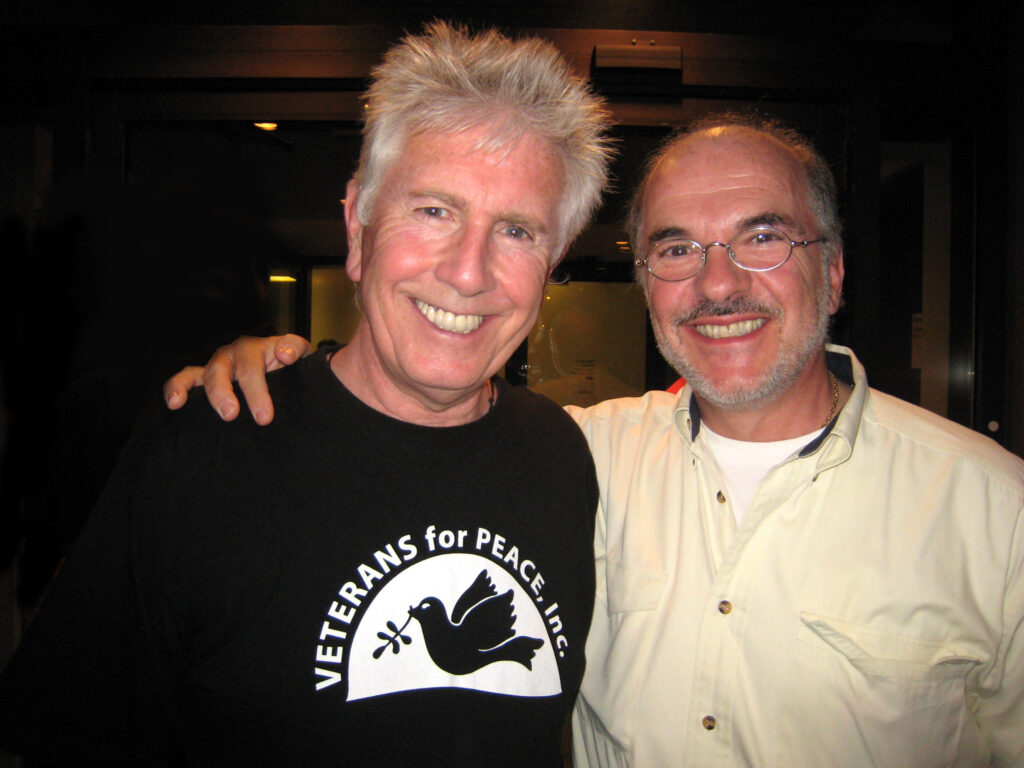
When Crosby, Stills & Nash performed in Montreal in 2008, Peter was given an opportunity to meet Graham Nash after the concert. He brought with him an original mono pressing of In the Hollies Style, the Hollies’ second album and a treasured record from his collection.
Nash immediately recognised the rarity of the album, and what began as a request for an autograph developed into a warm conversation. Peter explained that his musical Jeanne had premiered eleven years earlier on the same stage on which Nash had just performed, but their conversation soon reached further into the past.
Peter told Nash about Tamás Barta, Hungária’s extraordinarily gifted guitarist and a devoted admirer of the Hollies. Barta had admired Nash so greatly that he had even modelled his appearance on him. Peter then explained that his former colleague had later been murdered in Los Angeles.
Nash listened with evident interest and compassion. For Peter, the encounter unexpectedly connected a formative musical influence with the memory of a gifted friend whose life had ended tragically.
COLLABORATION ACROSS THE DECADES
No musical is created by one person alone.
Throughout Peter’s career, collaboration has repeatedly altered the course of his work. Bandmates brought new sounds and ideas; singers revealed what a melody could become in a particular voice; lyricists discovered words within music; and directors helped transform scores and scripts into live theatre.
From Miklós Fenyő, Péter Csomós, Tibor Tátrai and Kati Kovács in Hungary to Vincent de Tourdonnet, Martin Charnin, Thomas Meehan, Amy Engelhardt, Alan Bryce and Tony Calabretta in North America, every creative partnership added something new.
Some collaborations lasted for a single project. Others continued across many years and several works. Each required Peter to listen, respond and sometimes rethink material to which he had already become deeply attached.
That willingness remains central to his approach. For Peter, development is not an admission that a work has failed. It is how a promising musical becomes a stronger one.
A LIFELONG PASSION FOR FLIGHT
Alongside music, one passion has accompanied Peter for almost his entire life: flying.
His fascination began in childhood, watching aircraft and learning to identify different types of aeroplane. A visit to Budapest’s Ferihegy Airport brought him into close contact with the machines, pilots and atmosphere of aviation at a time when air travel still possessed a special sense of adventure.
At eleven, Peter accompanied his mother and other performers to an event involving the Hungarian airline Malév. In return for an informal concert, the artists were taken on a sightseeing flight over Budapest. Peter was allowed into the cockpit, where the instruments, switches and view over the city left an indelible impression.
He later flew gliders at Hármashatárhegy and, after moving to Canada, returned seriously to aviation and earned his pilot qualifications.
Peter once described music as his wife and flying as his mistress. The two passions offered different forms of freedom, but both depended upon discipline, preparation, instinct and the confidence to leave the ground.
The name Runway99 draws upon that lifelong fascination. A runway marks the place where preparation turns into movement—where something gathers momentum, leaves familiar ground and begins travelling towards a new destination.
THE NEXT DESTINATION
Leonardo: The Man Behind the Smile
Peter’s most recent musical brings together many of the qualities developed throughout his career.
Created with Canadian playwright Tony Calabretta, Leonardo explores the life and imagination of Leonardo da Vinci—not merely as the creator of famous paintings, but as a restless thinker, inventor and human being whose curiosity ranged across art, science, anatomy, engineering and flight.
The subject feels particularly appropriate for Peter. Leonardo’s fascination with possibility, his refusal to remain within a single discipline and his desire to understand how things work all find echoes in Peter’s own creative journey.
The musical has already undergone readings, presentations and workshop development. Most recently, selected scenes and songs were presented in England by the Thalian Theatre Company, under musical director Margaret Johnson and director Darren Barsby.
Broadway producer Jana Robbins attended the workshop and offered a detailed professional critique. Peter and Tony subsequently accepted many of her recommendations and began revising the work.
That process continues.
The writers recognise that an ambitious new musical reaches its full potential through testing, questioning and collaboration. They remain open to further workshops, dramaturgical development and the involvement of an experienced production company capable of helping Leonardo take its next major step.
The work is not being presented as something sealed and untouchable. It is a living musical with a strong score, an extraordinary subject and room to grow through the contributions of new creative partners.
THE JOURNEY CONTINUES
From the clubs of Budapest to recording studios in Berlin, from a new life in Montreal to theatrical stages across North America, Peter Sipos’s journey has never followed a predictable route.
Every chapter has left something behind: the excitement of Western rock and roll, the discipline of classical music, the instinct for vocal harmony, the craft of the arranger and the belief that music can carry a story beyond words.
The people Peter encountered along the way repeatedly changed the direction of his work. Bands became partnerships, recordings led to international opportunities and one musical opened the door to another.
Today, those experiences come together in Leonardo—Peter’s most recent musical and a work continuing to evolve through performance, discussion and collaboration.
After more than five decades of writing, arranging, recording and composing for the theatre, Peter remains interested in the same essential possibility that first drew him towards music:
the chance to create something that has never been heard before.