
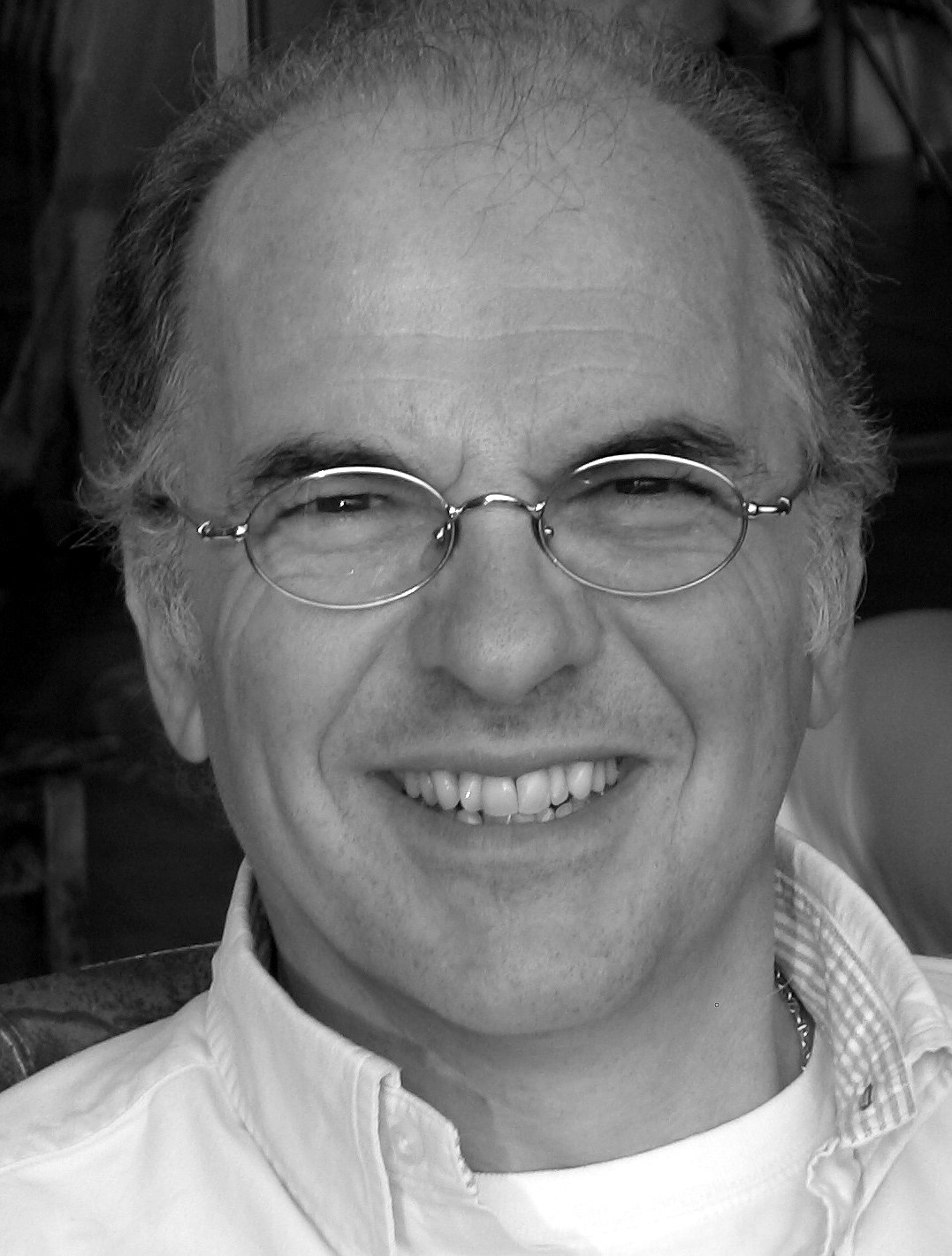
about Peter
A LIFE SHAPED BY MUSIC
Peter was born in Budapest into a family in which music was already an important presence.
His mother, Edit Fábry, was an opera singer who later became a respected singing teacher. Peter grew up hearing voices being trained and music being approached with discipline, expression and professional seriousness.
Although his mother initially imagined a classical future for him, Peter’s own imagination was captured by the sounds arriving in Hungary from the West. Rock and roll, beat music and, above all, the Beatles introduced him to a new musical language.
He learnt by listening: studying bass lines, vocal harmonies, rhythms and arrangements directly from records. Those recordings offered more than songs to perform. They became an education in how music was constructed and how a group of musicians could create an identity of its own.
The classical music of his childhood nevertheless remained with him. His later discovery of Gershwin’s Rhapsody in Blue, performed and conducted by Leonard Bernstein, led him back towards Liszt, Bach and the orchestral world.
That meeting of influences—popular immediacy and classical scale—would eventually become one of the defining qualities of Peter’s music.
FROM BASS PLAYER TO COMPOSER
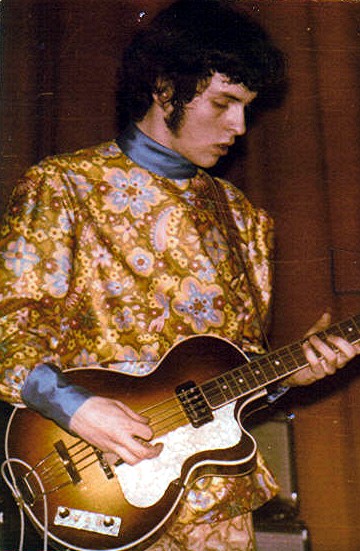
Peter joined Hungária in 1969 while still a teenager and became part of the rapidly developing Hungarian beat scene.
As a bassist and singer, he experienced the intensity of professional music at a young age: concerts, recording sessions, television appearances, international travel and national recognition.
He later joined Juventus, helping to build a group known for its hard rock sound, accomplished musicians and sophisticated vocal harmonies. During this period, Peter’s work expanded beyond performance. He composed songs, created arrangements and undertook assignments for radio and television.
His collaborations included work with leading Hungarian singer Kati Kovács. Juventus accompanied her on Add már, Uram, az esőt, winner of the Grand Prix at the 1972 Táncdalfesztivál.
Peter’s ability to communicate in German also helped him establish valuable relationships with broadcasters and recording professionals in East Germany. These connections created international opportunities for Juventus and the re-formed Hungária and strengthened Peter’s understanding of music as a career capable of crossing borders.
Gradually, the bassist standing within the band became the composer, arranger and musical director shaping the complete sound around it.
A NEW BEGINNING IN CANADA
Peter left Hungary in 1979 and, following a period in Germany, arrived in Canada on 28 May 1980.
The move required him to rebuild his professional life in a country where his achievements in Hungary were largely unknown. He learnt new repertoire, performed for new audiences and formed relationships within Montreal’s musical community.
Although beginning again was difficult, it also gave Peter the freedom to broaden his work. He continued composing, arranging and producing while maintaining creative connections with musicians in Hungary and Europe.
His recording work during the 1980s included Pour vous, performed by a young Céline Dion, and the distinctive Mozart Rock album with internationally acclaimed Hungarian opera singer Júlia Hamari.
*Mozart Rock* brought together two important parts of Peter’s musical identity. Mozart’s familiar melodies were reimagined through contemporary arrangements, rock instrumentation and studio production, connecting the operatic tradition of Peter’s childhood with the popular music that had shaped his professional career.
Canada became more than Peter’s new home. It became the place where his many musical experiences began moving towards an entirely new form of expression.
DISCOVERING MUSICAL THEATRE
Musical theatre allowed Peter to bring every part of his musical background together.
Within a theatrical score, popular song, rock rhythms, vocal harmony and orchestral writing could all contribute to character, emotion and story. Music could develop across an entire evening, returning in new forms as the drama unfolded.
Peter’s major theatrical work began with Jeanne, created with writer and lyricist Vincent de Tourdonnet. The musical’s successful productions in Montreal and Quebec City demonstrated the scale and emotional range of Peter’s theatrical writing.
Jeanne also introduced Peter to Martin Charnin, the Tony Award-winning lyricist and director of Annie. Their creative relationship continued with Robin Hood, written with celebrated Broadway book writer Thomas Meehan.
The musical travelled through readings, workshops and productions over more than a decade, culminating in a professional staged reading in New York.
Further theatrical projects followed. Contact, created with Amy Engelhardt and Alan Bryce, transformed Carl Sagan’s exploration of science, faith and humanity into musical theatre. Dybbuk entered the darker world of Jewish folklore, memory and spiritual possession.
Each project presented Peter with a different musical and dramatic challenge. What connected them was his instinct for melody and his desire to discover the emotional heart of the story.
A COLLABORATIVE COMPOSER
Peter’s work has always been shaped by collaboration.
Throughout his career, he has worked with musicians, singers, lyricists, writers, directors, producers and performers who brought their own experience and imagination to the material.
Peter understands that a new musical cannot reach its potential in isolation. Songs and scenes need to be heard aloud. Actors reveal possibilities that may not be apparent on the page, while directors, audiences and theatrical advisers help the writers understand what is working and what still needs attention.
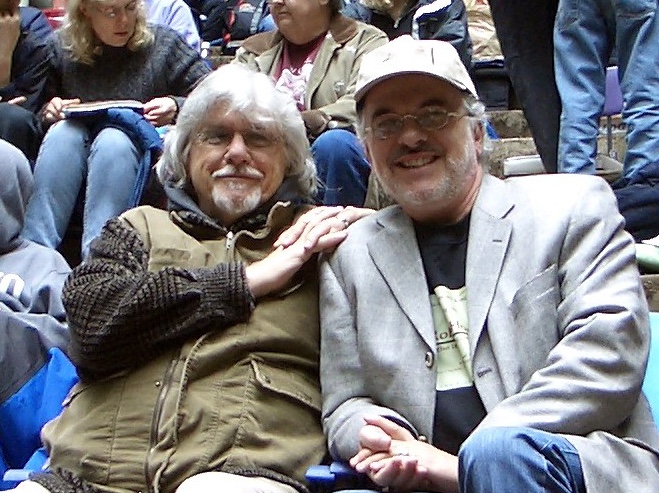
That openness is particularly important to Peter’s latest musical, Leonardo: The Man Behind the Smile, written with Canadian playwright Tony Calabretta.
Following its most recent workshop in England, Peter and Tony considered the detailed observations of Broadway producer Jana Robbins and began making substantial revisions. They remain open to further workshops, dramaturgical development and collaboration with an experienced production company.
For Peter, development does not compromise the original vision. It is the process through which that vision becomes clearer, stronger and more theatrical.
LEONARDO AND THE WORK AHEAD
Leonardo da Vinci is a particularly fitting subject for Peter’s most recent musical.
Artist, scientist, inventor, musician and observer of the natural world, Leonardo refused to confine his curiosity to a single discipline. His life was driven by questions, experiments and the pursuit of ideas that could not always be realised within his own lifetime.
Peter’s own career has been characterised by a similar willingness to cross boundaries: between popular and classical music, Hungary and Canada, recording and theatre, instinct and technique.
Leonardo draws upon everything Peter has learnt during a lifetime in music. It also represents something new—a work still capable of changing through creative collaboration and practical exploration on stage.
The next chapter has not yet been written.
BEYOND THE MUSIC
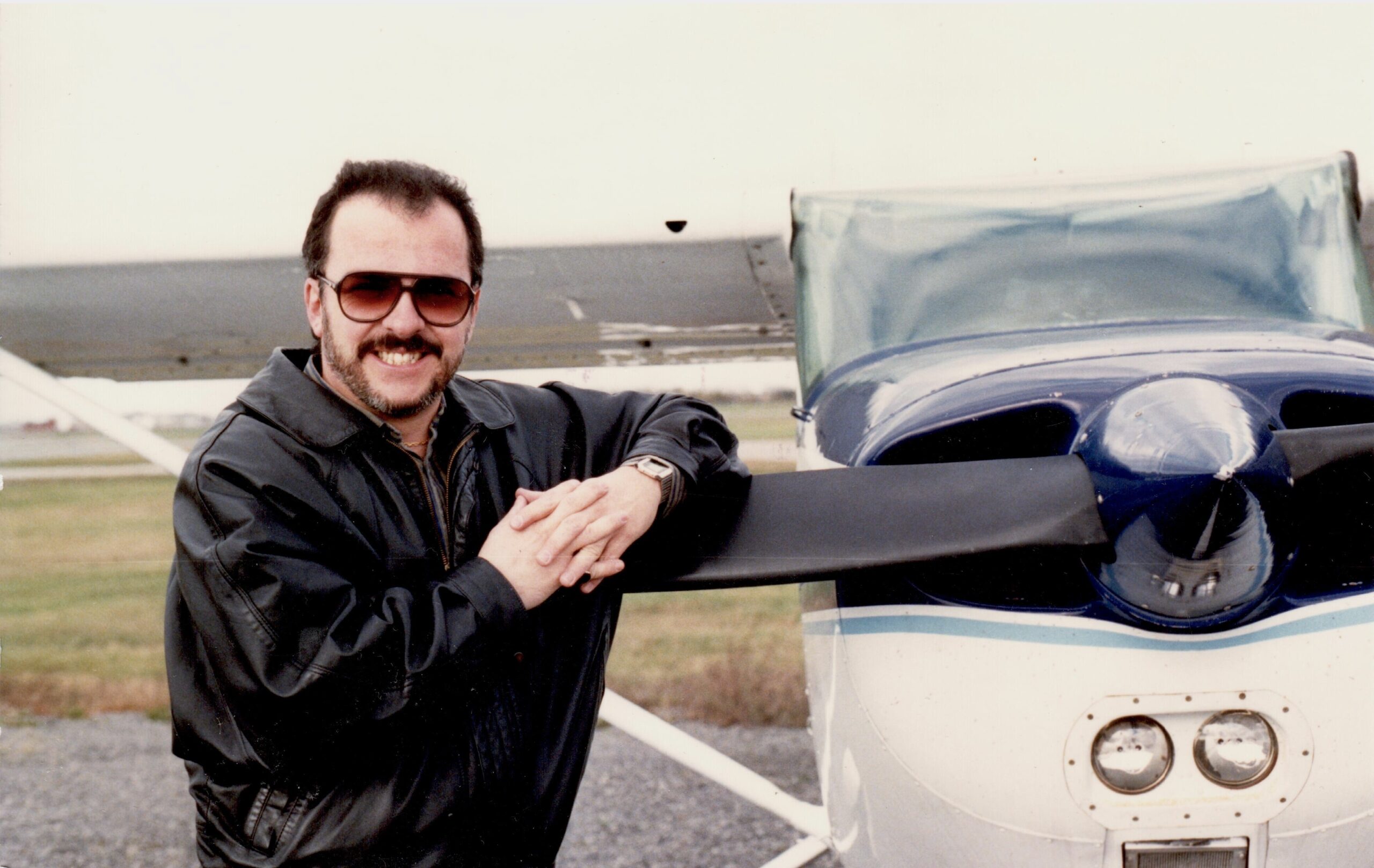
Away from composition, Peter has maintained another lifelong passion: aviation.
His fascination with aircraft began during childhood visits to Budapest’s Ferihegy Airport. He later flew gliders in Hungary and, after settling in Canada, returned to flying and earned his pilot qualifications.
Music and aviation may appear to belong to very different worlds, but both have offered Peter a sense of freedom, possibility and discovery. Both require preparation and discipline—and both begin with the courage to leave familiar ground.
That relationship lies behind the name Runway99: a place from which to look back across an extraordinary musical career while preparing for the journey still ahead.
STILL CREATING
Peter Sipos’s career has never followed a single, predictable route.
He has been a bassist in a nationally recognised band, a singer, arranger, studio musician, record producer and theatrical composer. His work has connected Budapest, Berlin, Montreal, Washington State, New York and, most recently, England.
Across every period, certain qualities have remained constant: curiosity, adaptability, a love of strong melodies and an eagerness to work with people who can bring something new to the music.
After more than five decades, Peter is not simply preserving the work he has already created.
He is still listening, still revising—and still composing.


Peter’s Story – in His Own Words
In 2016, Peter’s autobiography, A sakktábla két szélén — On Two Sides of the Chessboard — was published in Budapest, commissioned by the Museum of Hungarian Rock Music.
The book tells the story of a life and musical career lived on two sides of the Atlantic: from Peter’s formative years in Hungary and his work with Hungária and Juventus, to the new creative life he built in Canada and his growing involvement in musical theatre.
But Peter’s purpose in writing it went beyond autobiography. Having watched accounts of the Hungarian music scene in which he had participated become distorted or incomplete over the years, he felt an increasing desire to put his own memories on record — candidly, and from the perspective of someone who had actually been there.
Writing from Canada gave him the freedom to do exactly that.
Peter describes the book, characteristically, almost as a human backup: committing decades of memories to paper while they were still vivid and before time could begin to erase them. Looking back over his life, he calculated that he had spent approximately half of it in Europe and half in North America — two worlds that together shaped the musician, composer and writer he became.
Now sold out, A sakktábla két szélén is both Peter’s personal memoir and his eyewitness account of an extraordinary period in Hungarian popular music.