
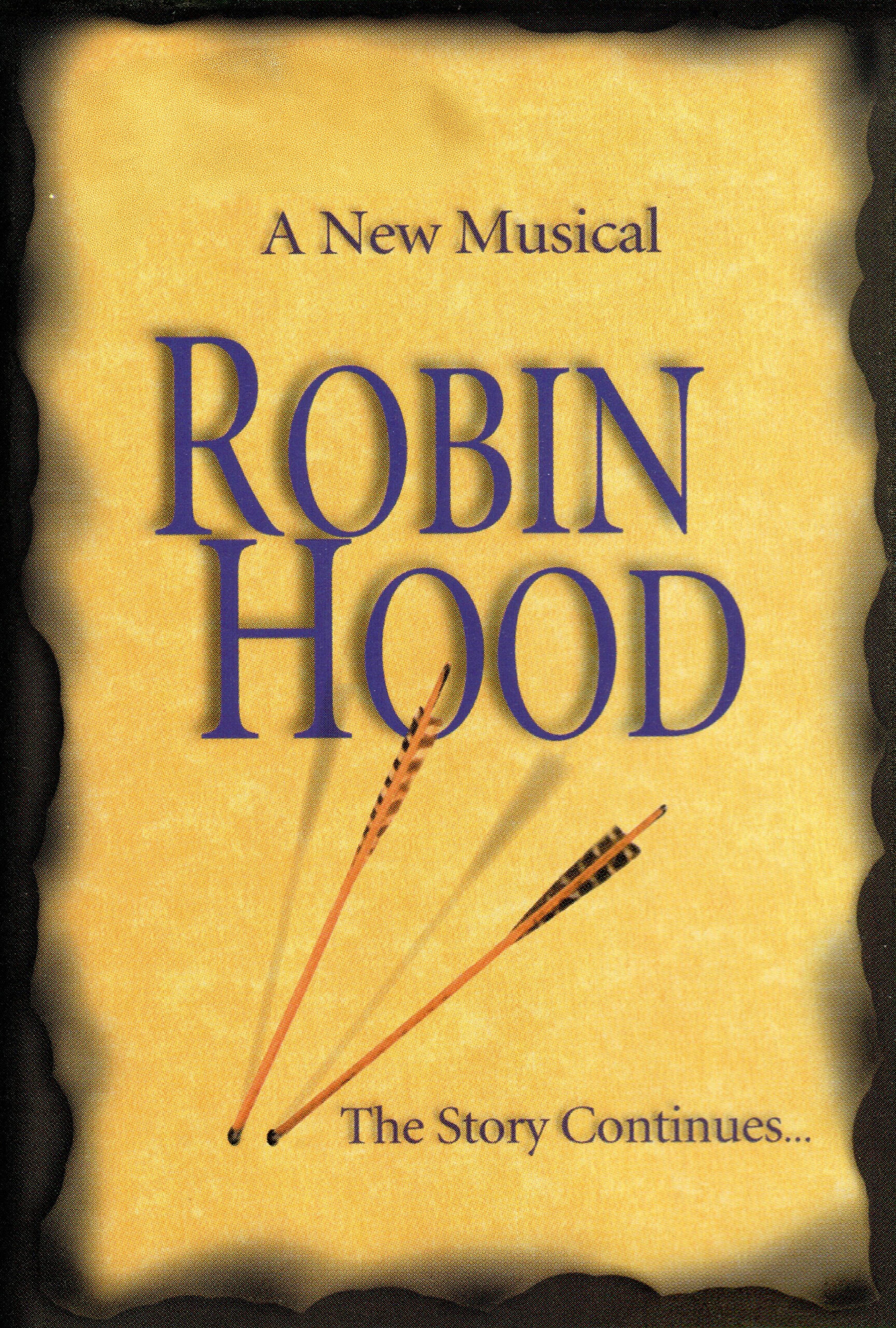
ROBIN HOOD
The Legend Continues
A New Musical
Book by Thomas Meehan
Music by Peter Sipos
Lyrics by Martin Charnin
The legend didn’t end in Sherwood Forest.
Eighteen years after leaving Sherwood, Robin Hood returns home to find his old enemies waiting, his Merry Men older — and a new generation ready to take up the adventure.
A musical adventure about ageing, love, legacy — and passing the bow to the next generation.
THE STORY BEHIND ROBIN HOOD
From Inspiration to the Stage
A Legend Reimagined
Robin Hood began with an irresistible question: what happens after the legend?
Rather than simply retelling the familiar adventures of the young outlaw of Sherwood Forest, the musical returns to Robin Hood and his Merry Men many years later. They are older, their lives have moved on and the passing of time has begun to catch up with them — but England still has need of its heroes.
At the heart of the story is Robin’s return to England and his reunion with Maid Marian. He discovers that he has a child — not the son he had imagined might one day continue his legacy, but a daughter, Elizabeth. As Robin confronts his own age and the unfinished business of his past, Elizabeth and a new generation of Merry Men begin to take their place in the adventure.
It is a clever reversal of the traditional Robin Hood story: the old heroes remain, but gradually discover that heroism does not belong to one generation alone. The familiar world of Sherwood becomes the setting for a story about love, family, ageing and legacy, wrapped in the humour, romance and swashbuckling adventure of the original legend. Contemporary descriptions of the musical likewise emphasised its setting roughly twenty years after the familiar Robin Hood adventures and the arrival of the Merry Men’s children.
A New Creative Partnership
The musical brought Peter Sipos together with two celebrated figures of Broadway theatre: Thomas Meehan, who wrote the book, and Martin Charnin, who wrote the lyrics and directed.
Peter’s connection with Charnin had already been established through Jeanne La Pucelle, the Joan of Arc musical for which Peter composed the music. Charnin had directed that production, and the two men developed a strong creative rapport. When the opportunity arose to develop another musical together, Peter joined Charnin and Meehan in creating a completely new continuation of the Robin Hood legend.
It was a formidable combination. Meehan and Charnin had previously collaborated on Annie, while Meehan would become one of Broadway’s most celebrated book writers. Peter brought to Robin Hood the melodic theatrical style that had characterised his work on Jeanne.
The result was not conceived as a parody of Robin Hood, nor simply as another version of the familiar legend. Martin Charnin described what attracted him to the project rather more simply in the Village Theatre programme: “It’s heroic and about the triumph of the human spirit and best of all, it’s about love.”
“It’s heroic — and about the triumph of the human spirit… and best of all — it’s about love.”
— Martin Charnin
Finding Robin Hood on Stage
The musical then began the long process familiar to the development of new theatrical works: readings, revisions, workshops and productions, with the creative team repeatedly learning from seeing and hearing the material performed.
By 2002, the project was being developed with NETworks Presentations. An early private New York reading featured Steve Blanchard as Robin and Maureen McGovern as Marian, and was intended specifically to help the creators discover what worked and what still needed development.
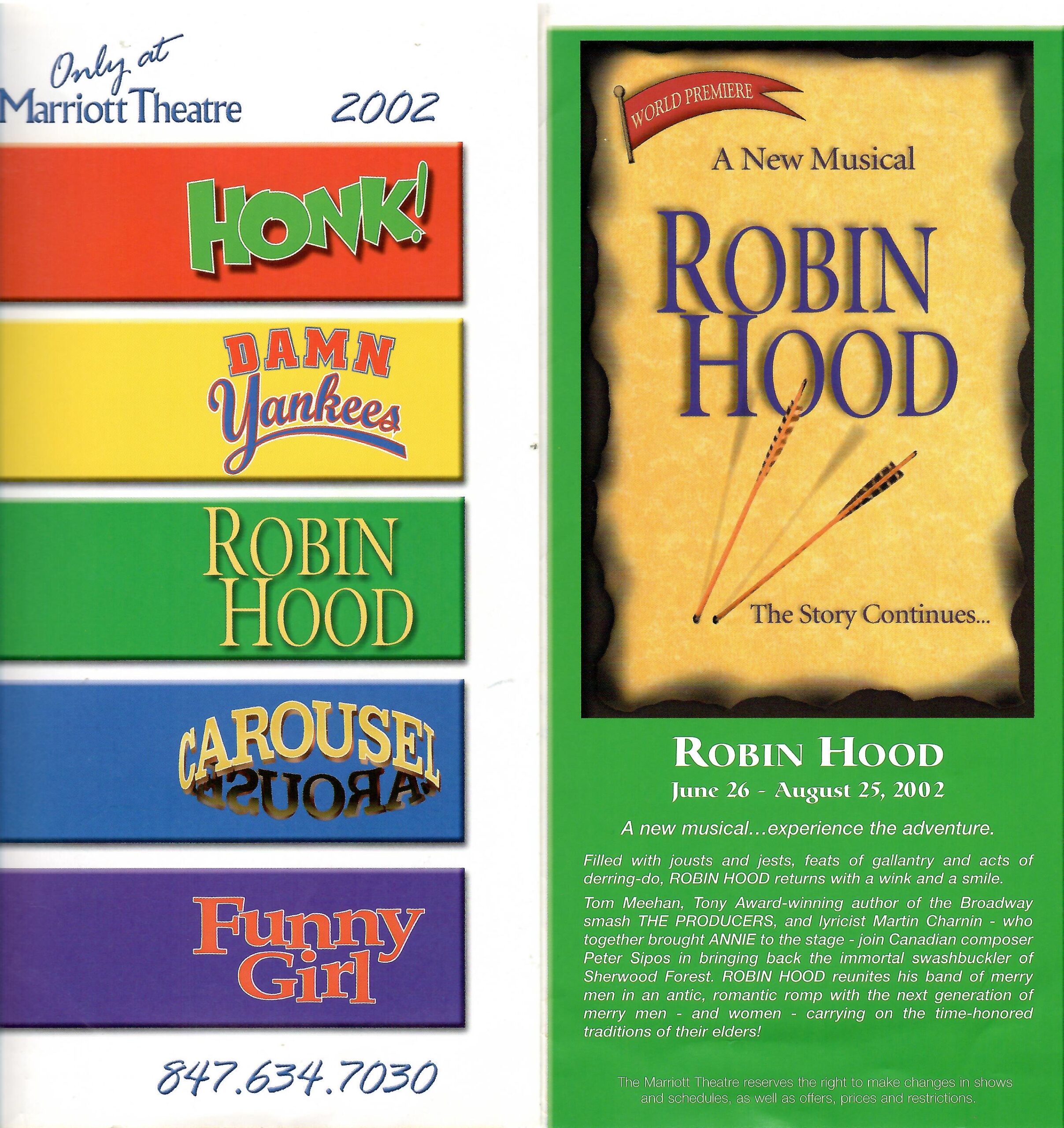
The Marriott Theatre subsequently announced Robin Hood for its 2002 season although the planned production did not ultimately proceed. Rather than being the end of the project, it became another stage in its development. Charnin later explained that audience feedback from a Marriott reading had proved valuable and that the team continued revising the piece.
Developing the Musical
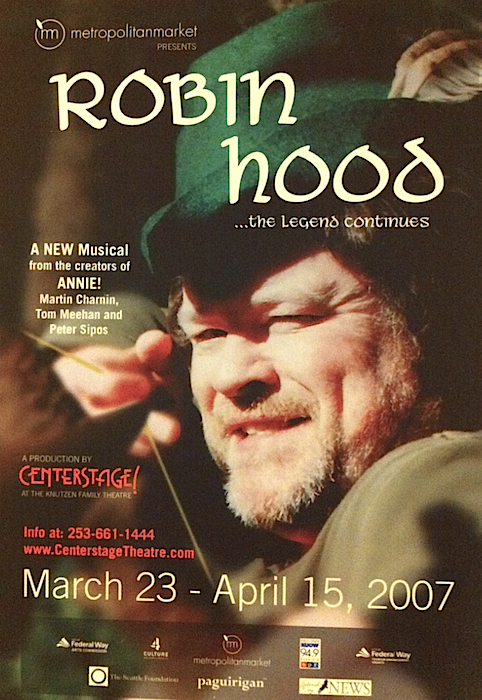
In August 2003 the writers travelled to Florida for another developmental reading, this time using performers from Seaside Music Theater at Daytona Beach Community College.
The purpose of these readings was not simply to demonstrate the musical, but to discover it.
Thomas Meehan described readings as one of the most important stages in creating a musical: material that appears to work on paper can reveal something entirely different when actors perform it before an audience. Charnin similarly regarded the audience as an essential creative participant.
That philosophy would become particularly important when Robin Hood finally reached a fully staged developmental production.
The Village Theatre — 2004
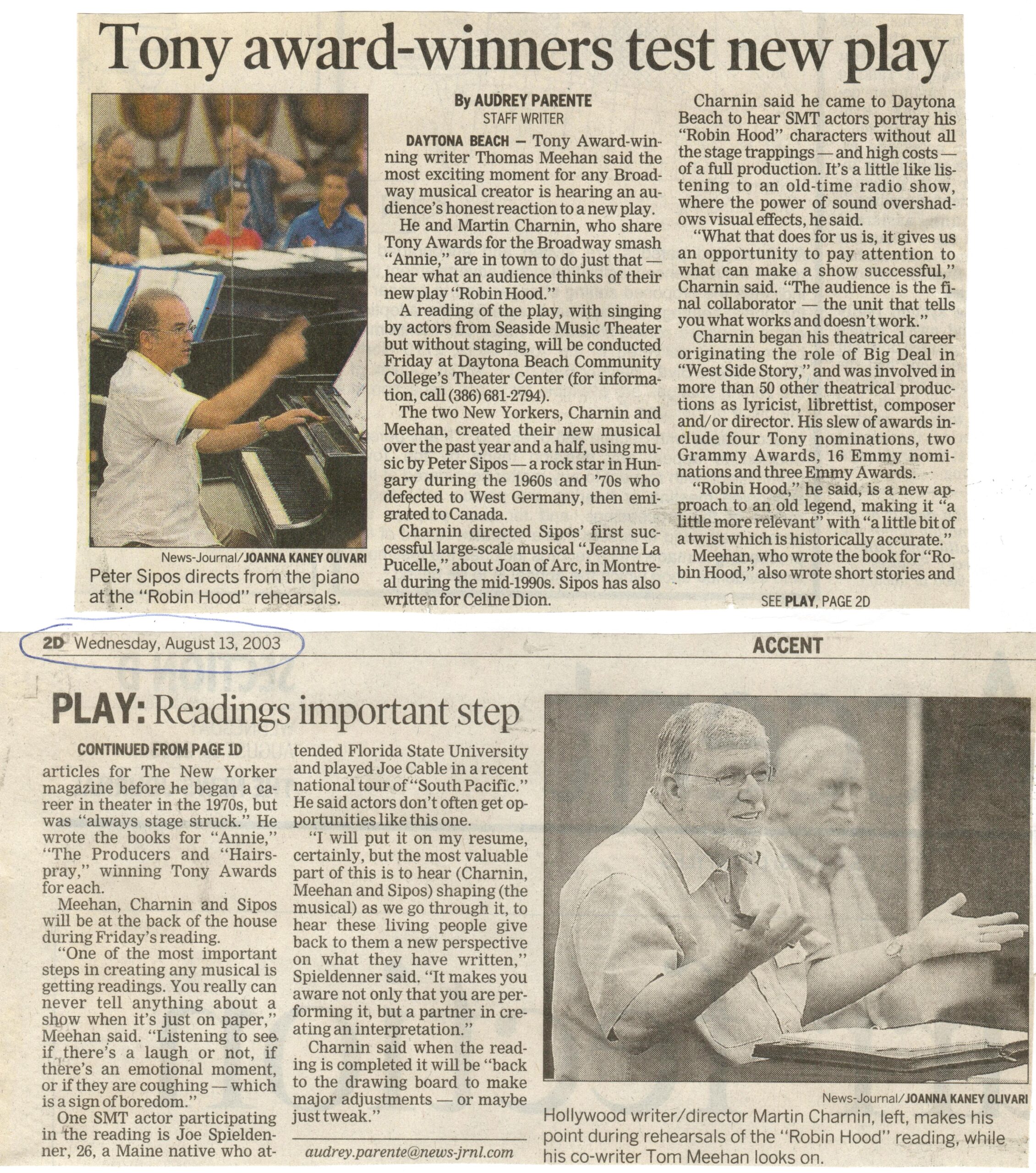
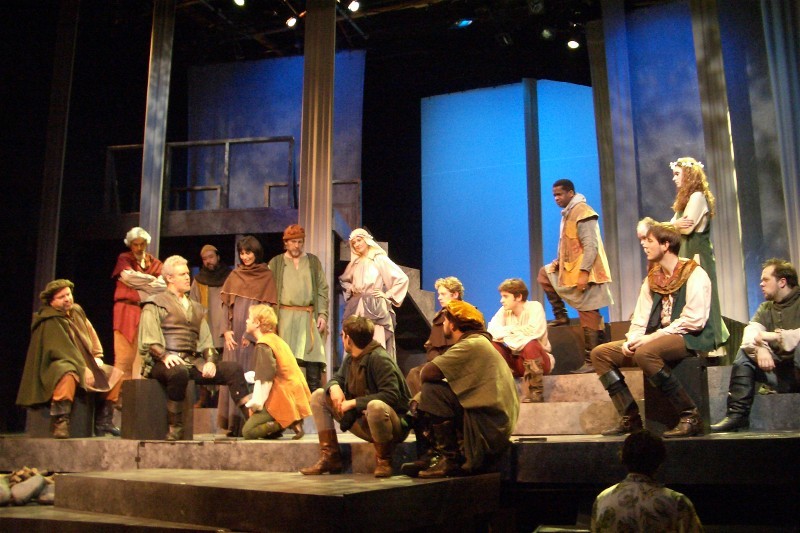
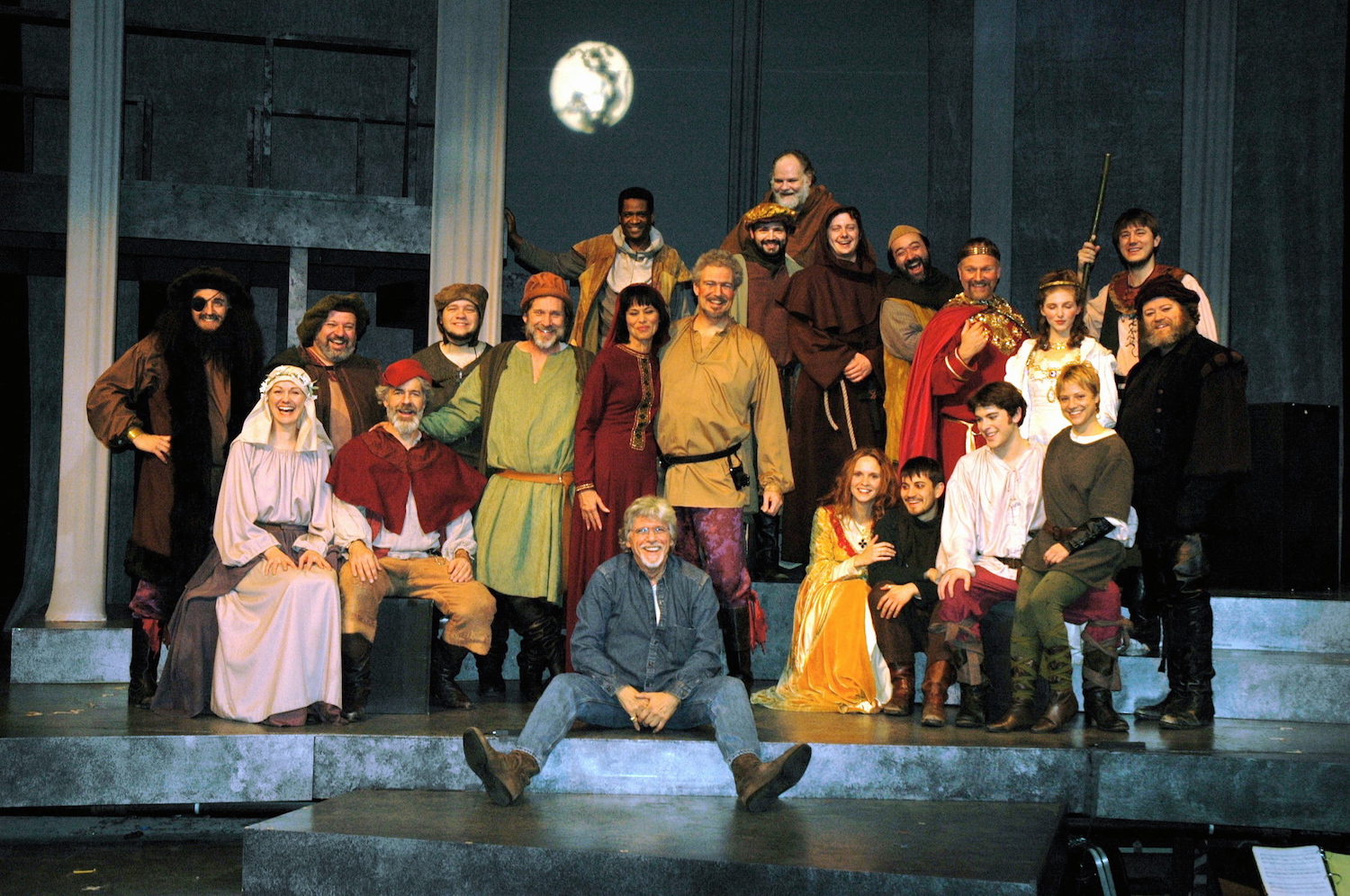
In December 2004, Robin Hood: The Legend Continues was presented at the Village Theatre in Issaquah, Washington, as part of its Village Originals programme for developing new musicals.
This was an important milestone: the creators could now see the musical fully on its feet in front of an audience.
The production was directed by Martin Charnin, with Hugh Hastings as Robin Hood, Shelly Burch as Maid Marian and Katherine Strohmaier as Elizabeth. Peter’s music was heard within a complete theatrical production, alongside Thomas Meehan’s book and Charnin’s lyrics.
For Charnin, the audience completed the creative process. As he explained at the time:
“We were missing that last collaborator — the final collaborator is the audience.”
That is another quotation I would consider displaying prominently — although probably smaller than the “triumph of the human spirit” quotation.
Robin Hood Returns to the Forest — 2007
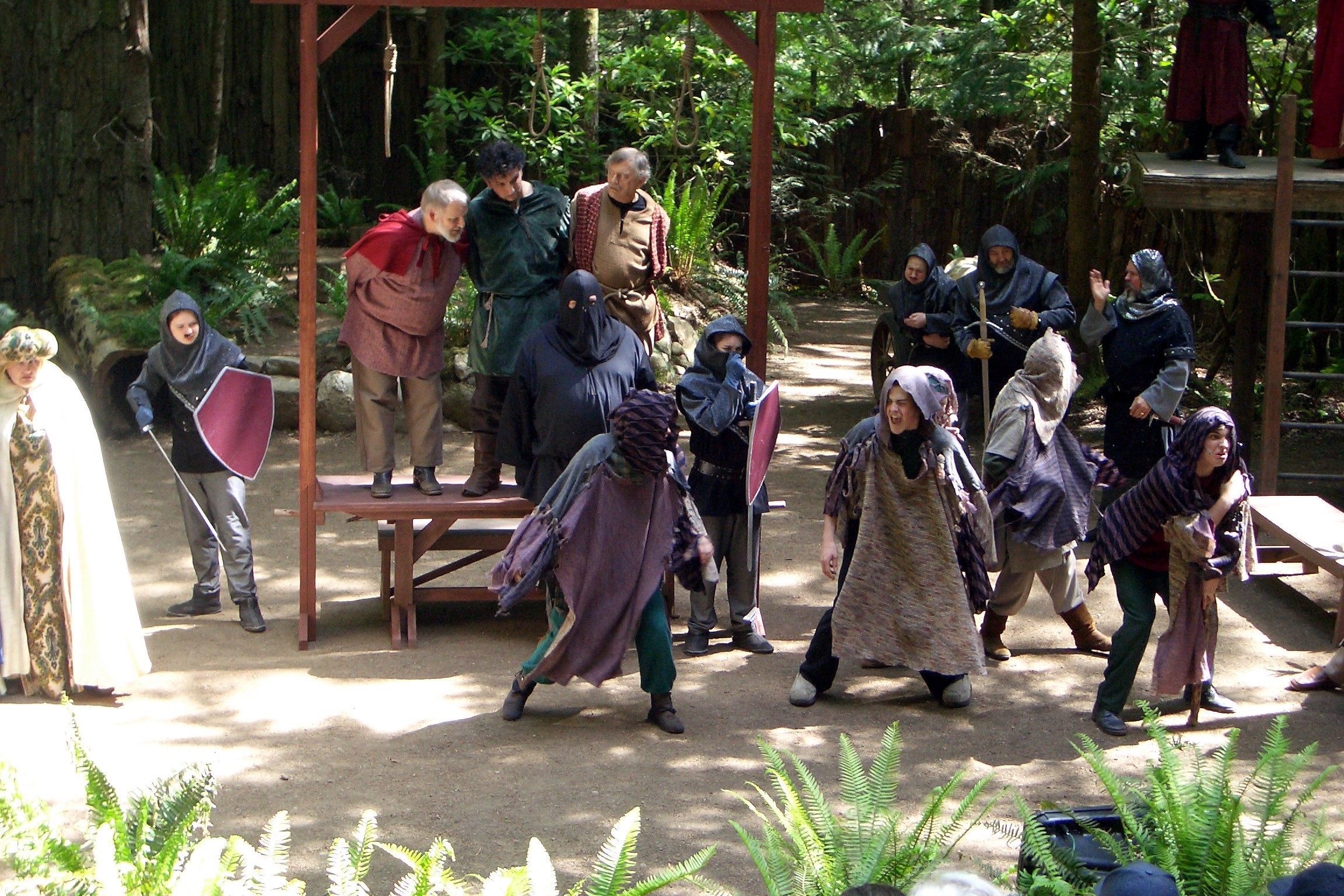
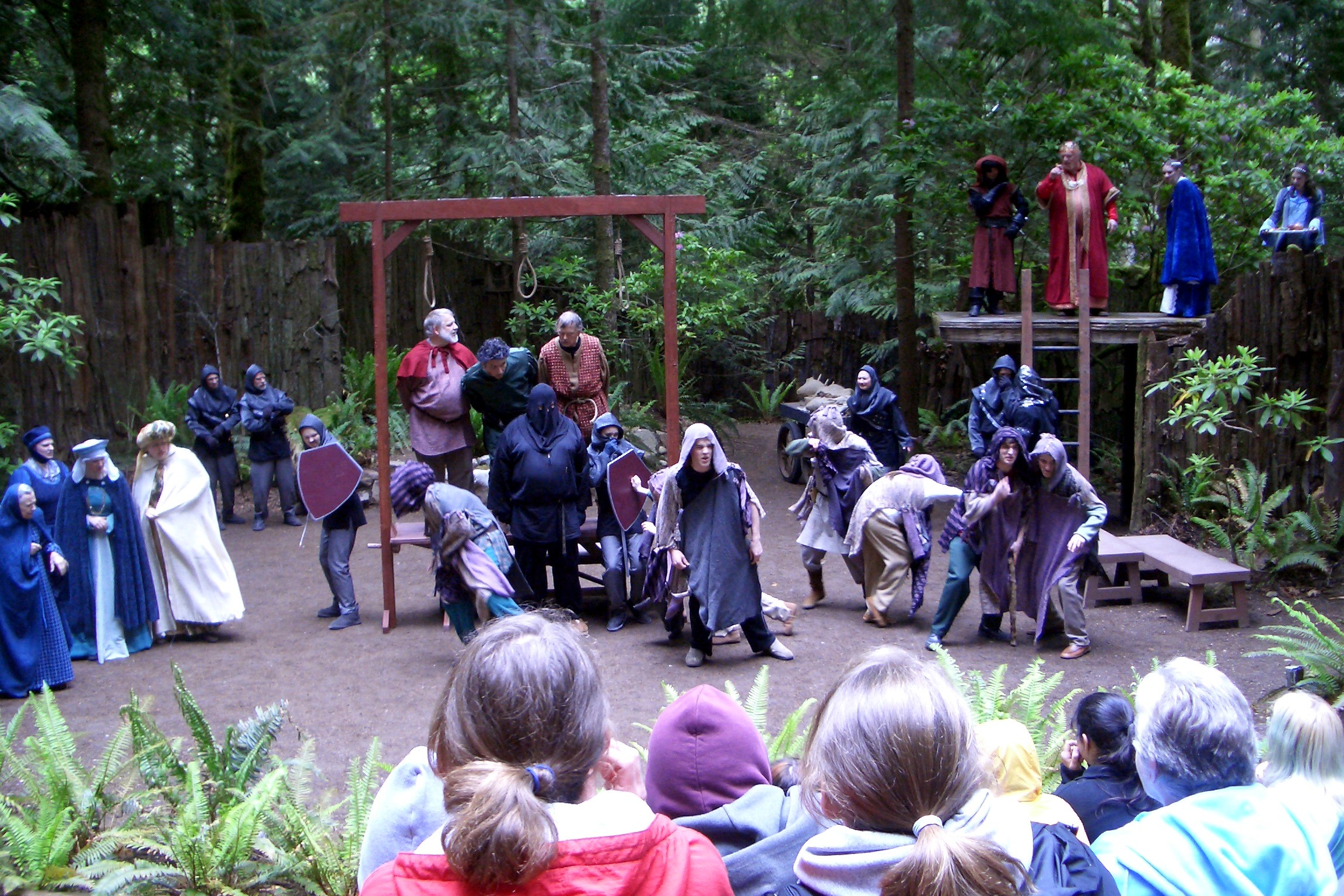
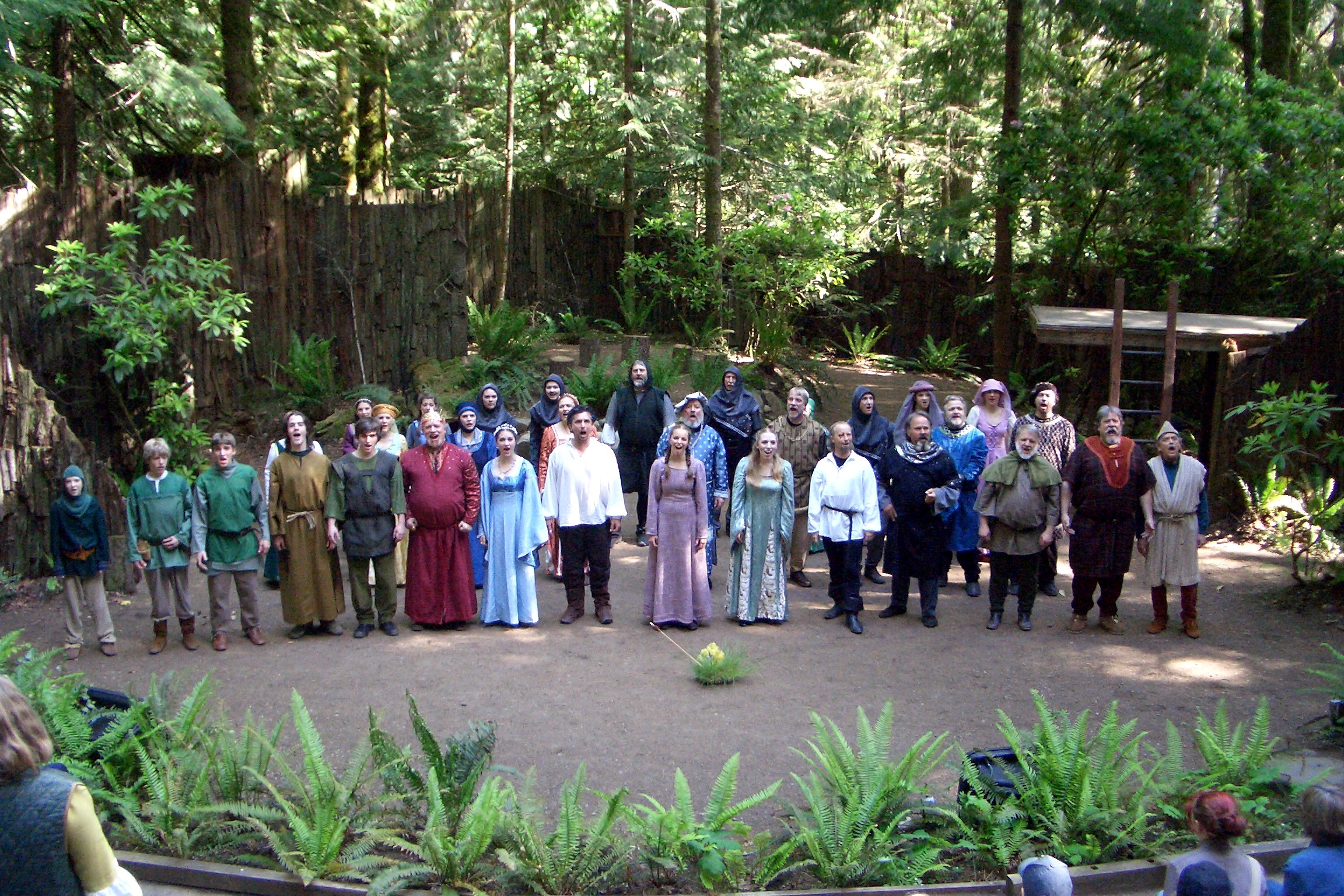
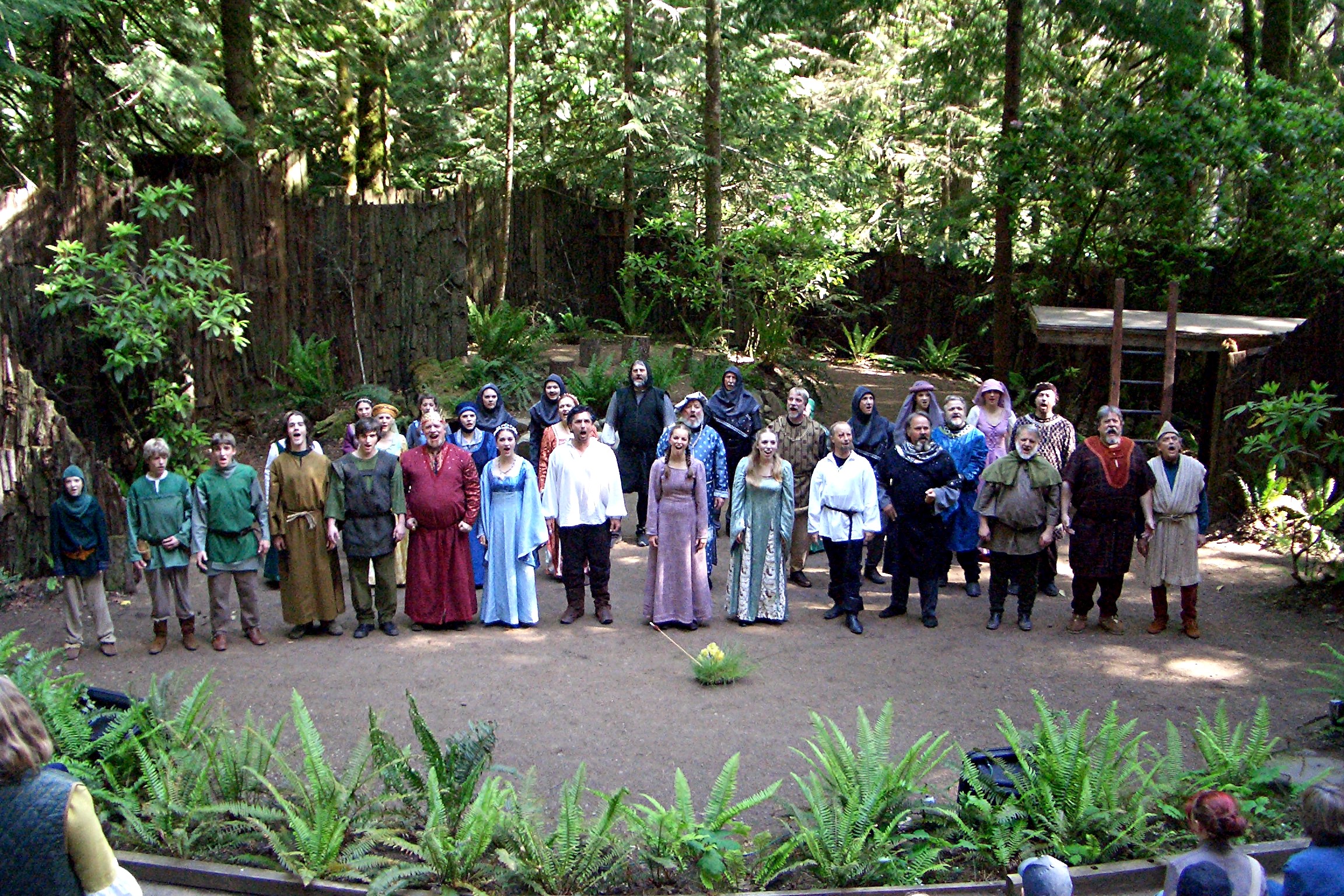
There is something wonderfully appropriate about the next chapter in the musical’s journey. In the summer of 2007, Robin Hood: The Legend Continues was presented by the Mountaineers Players at the Kitsap Forest Theater in Washington State — an outdoor theatre surrounded by woodland.
For a musical set in and around Sherwood Forest, it was a remarkably fitting home. Instead of recreating the forest within a conventional theatre, the production placed Robin, Marian, the Merry Men and their adversaries amongst real trees, with the natural landscape forming part of the theatrical setting.
The production ran during May and June 2007 and continued to present the central idea behind the musical: Robin Hood returns from the Crusades some twenty years after the adventures of the familiar legend. Older now, he reunites with Marian and discovers the child he never knew he had, while a younger generation begins to take up the mantle of the Merry Men.
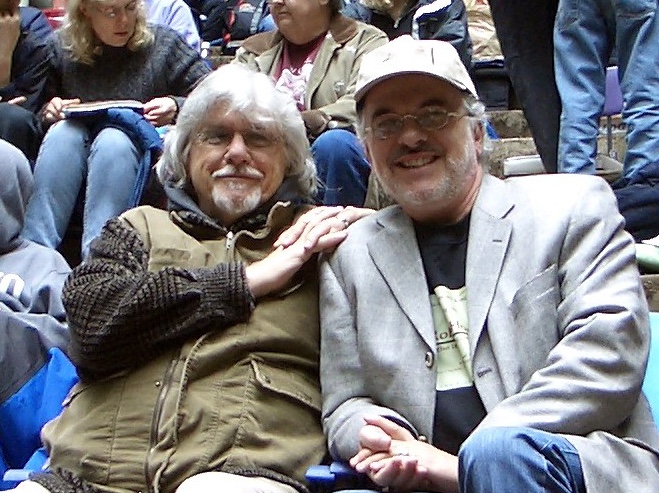
Peter Sipos and Martin Charnin attended the Kitsap production together. By this point their creative association stretched back more than a decade, from Jeanne La Pucelle through the successive development of Robin Hood. The photograph of the two men together at Kitsap captures a particularly happy moment in that long collaboration.
From the Forest to New York — 2013
Six years after Robin Hood had returned quite literally to the forest at Kitsap, the musical resurfaced in a very different setting. In May 2013, the work received a 29-hour Actors’ Equity staged reading in New York City, bringing Peter Sipos, Martin Charnin and Thomas Meehan’s musical into the heart of the American theatre world.
The intervening years had brought further development and a new title. Robin Hood: The Legend Continues had become Robin Hood — The Final Adventure. The essential idea remained: this was not another retelling of the familiar legend, but a story about what happened afterwards. Robin is older, the Merry Men are middle-aged, and King John and the Sheriff of Nottingham remain as troublesome as ever. Reunited with Marian, Robin also makes an unexpected discovery — he has a daughter, Elizabeth. As age begins to catch up with the old hero, a new generation of Merry Men, led by Elizabeth, is ready to continue what he began.
The New York reading reunited an exceptional creative team. Peter Sipos composed the music, Tony Award-winner Thomas Meehan — whose Broadway credits included Annie, The Producers and Hairspray — wrote the book, while Martin Charnin, Tony Award-winning lyricist and director of Annie, provided the lyrics and directed the reading. Musical direction was by Kevin Stites.
The cast was headed by Australian actor Anthony Warlow as Robin Hood, with Shelly Burch returning to the role of Marian. The reading was produced by Jana Robbins and Better World Productions and took place on 3 and 6 May 2013 — another significant step in a musical whose own journey had by then stretched for more than a decade.

The Adventure Continues
From its first production in 2002 to its New York reading more than a decade later, Robin Hood has travelled an unusually long road — changing, developing and finding new audiences along the way.
What began as a fresh look at one of the world’s most familiar legends became a collaboration between Peter Sipos and two of Broadway’s most celebrated theatre-makers, Thomas Meehan and Martin Charnin. Productions and readings took the musical from Chicago to Washington State, from an open-air theatre among the trees to a professional reading in New York.
And perhaps appropriately for a musical whose central idea is that legends don’t simply end, the story of Robin Hood remains part of Peter Sipos’s musical theatre journey.
The legend continues…